Matches Like Sabu vs. Lightning Kid Can Only Happen On the Indies
Just before his breakout as the 123 Kid, Sean Waltman finds himself defending his home turf against Sabu.

On May 5, 1991, the American Wrestling Association ran its last show at a high school gymnasium in Bloomington, Minnesota. Their closure was a formality — the AWA’s last TV taping took place in August 1990, and their final World Champion, Larry Zbyszko, was already working WCW, leaving the title vacant when Verne Gagne finally threw in the towel — and a fair amount of that promotion’s spirit would soon find itself taking root in Atlanta, when former AWA announcer Eric Bischoff became head of creative in World Championship Wrestling, but the AWA’s closure is less important here for its impact on the national scene than the local one. When the announcers calling this match between Sabu and the Lightning Kid note that the Minneapolis scene had run dry of events the caliber of NWA Grandslam, they aren’t being facetious. The AWA, moribund as it was, was the local scene, and shows like this were an attempt at filling a void the market had never experienced, Minnesota’s status as one of the capitals of professional wrestling being established as early as 1933, when Tony Stecher began promoting there.
I won’t linger here too long — there are historians far better equipped than I am to tell the story of the downfall of territories like the AWA and WCCW, local promotions that rose to national prominence on TV before falling victim, like so many others, to the World Wrestling Federation — but there was space in the marketplace for promoters who weren’t under the WWF or WCW banners to bubble under, like Tod Gordon’s Eastern Championship Wrestling in Philadelphia and Joe Pedicino’s Global Wrestling Federation in Dallas, which took over the USWA’s timeslot on ESPN. One contender for that #3 slot was the oldest name in the game, the National Wrestling Alliance, which was under the direction of Dennis Coralluzzo, a man who is rigorously thanked during this broadcast but whose place in wrestling history has yet to be cemented by Gordon and booker Paul Heyman’s double-crossing of the NWA in 1994.
Based on this show, which Cagematch (and thus, I assume, a magazine or issue of the Wrestling Observer Newsletter) claims 700 people attended, I think he had the right idea. The AWA was dead, but the audience for wrestling outside of the WWF/WCW paradigm hadn’t died with it, and two highlights of GWF programming — Jerry Lynn and the Lightning Kid — were locals. Both of them are featured in showcase matches on NWA Grandslam, Lynn against Chris Candido, Kid against Sabu. The main event is former NWA World Heavyweight Champion Terry Funk against former AWA World Tag Team Champion Road Warrior Hawk. Brad Rheingans wrestled The Tazmanic. Nailz was there. On paper, which is where most of the card is, this is peak 1990s indie wrestling, a mix of former television stars and local weekend warriors, with a few whose legends were in their infancy. The announcers give a lot of the credit for the big show feel to Coralluzzo, so I suppose that’s where the credit for this being pro-shot and aired on local TV should go, if not the presence of Wade Keller and at least a half-dozen photographers.
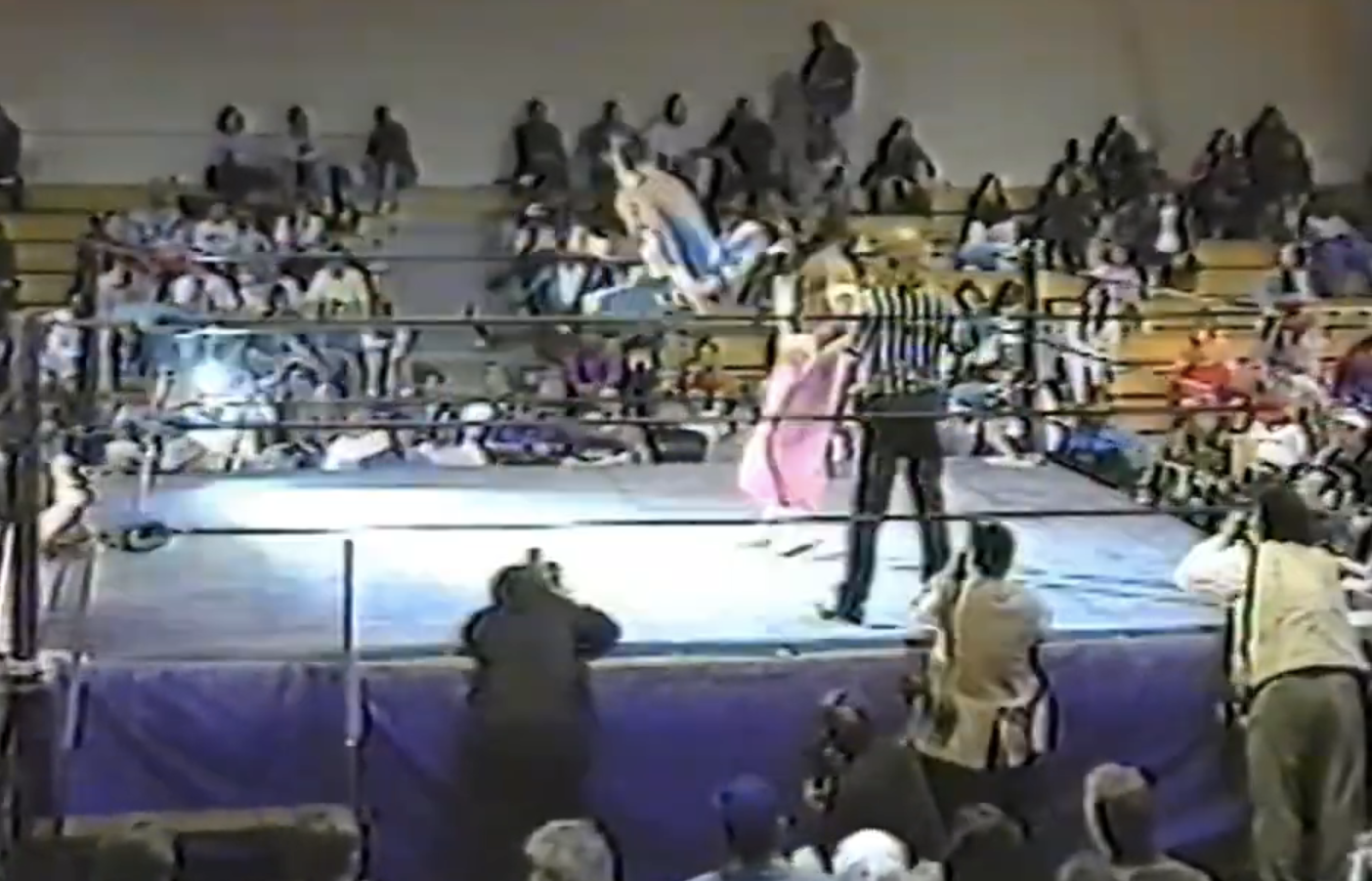
That crowd, I suspect, knew to be there. The “indie dream match” as we know it hadn’t been invented yet, but this is the template: an extremely talented, buzzy local wrestler on the verge of his national breakthrough against a bonafide magazine sensation — that’s a match for the tape traders and dirtsheet readers, for the hardcores and sickos, and that it survived from broadcast to VHS to YouTube is a miracle, a testament to how wrestling has been surviving and thriving outside of the bright lights and big marketing budgets of the longstanding paradigm of there only being one or two major wrestling companies at any given time for decades.
It’s also a great match, showcasing what made both wrestlers so special. Let’s start with Sabu. One narrative about 1990s wrestling that absolutely holds true is how groundbreaking Sabu was. There’s at least a half-dozen photographers in motion around the ring, trying to get a magazine-worthy shot of a man whose photos could be relied upon to sell magazines, and the announcers calling the match treat it like an introduction to his particular brand of madness. He’s related to The Sheik. He has scars lining his body, the origins of which are mysterious and likely seedy. This is an NWA show, so there’s no table-breaking or chair-throwing — this is as clean as a Sabu match gets — but he’s a phenomenal character, conveying how dangerous he is through body language (he never stops pacing and bouncing around) and action, opening things here with a single leg takedown of Kid, followed by a two-handed choke. He’s skilled, he’s wild, and if you’re on the other side of the ring from him, he’ll tear your ass up.
When Sabu passed last year, many, many people, myself included, talked about how innovative he was. One thinks of him on the cutting edge in ECW or Japan, how bright his fire burned regardless of setting, how said fire could not be snuffed out by WCW or WWE or his own choices. But watching this match for what must have been the 10th time, what struck me about Sabu, which feels just as obvious as I’m typing it up, is this: he would have been an absolute monster in the territory era. I mean, no shit, look at who his uncle was, but also look at him here, against local-boy-about-to-break-big Waltman and imagine him against Jerry Lawler in the mid-80s, all paranoid energy and blindside offense, as much of a terror as Terry Funk or Randy Savage in that role.
So far as babyfaces go, Sean Waltman was a great one, a fact that went overlooked by many until a run of bookings in CHIKARA under his 1-2-3 Kid moniker way back in 2011 prompted a lot of jilted nerds like me to go back and watch a bunch of WWF New Gen footage. Against the big and medium-size mangs of the World Wrestling Federation, it’s easy to take how good Waltman was for granted, but when you watch something like his famous Raw title bout against Bret Hart, you can see the full picture emerge: here’s a young man on the edge of the future, someone you don’t want to see beaten except that his comebacks are, if you’ll excuse the term, like lightning. You don’t need the near-future’s trove of kickboxing and MMA tapes to know that a kick to the mush can knock a man out, and Sean Waltman could kick just about anyone in the mush. You could make a believable upper card draw out of someone with his profile, and plenty of promotions did. Unfortunately, the WWF turned him heel in 1995 and the internet latched on to the phrase “X-Pac heat” in 2001 and you can’t just watch him plow through Sabu with a flying kick here without having to unpack some of that.
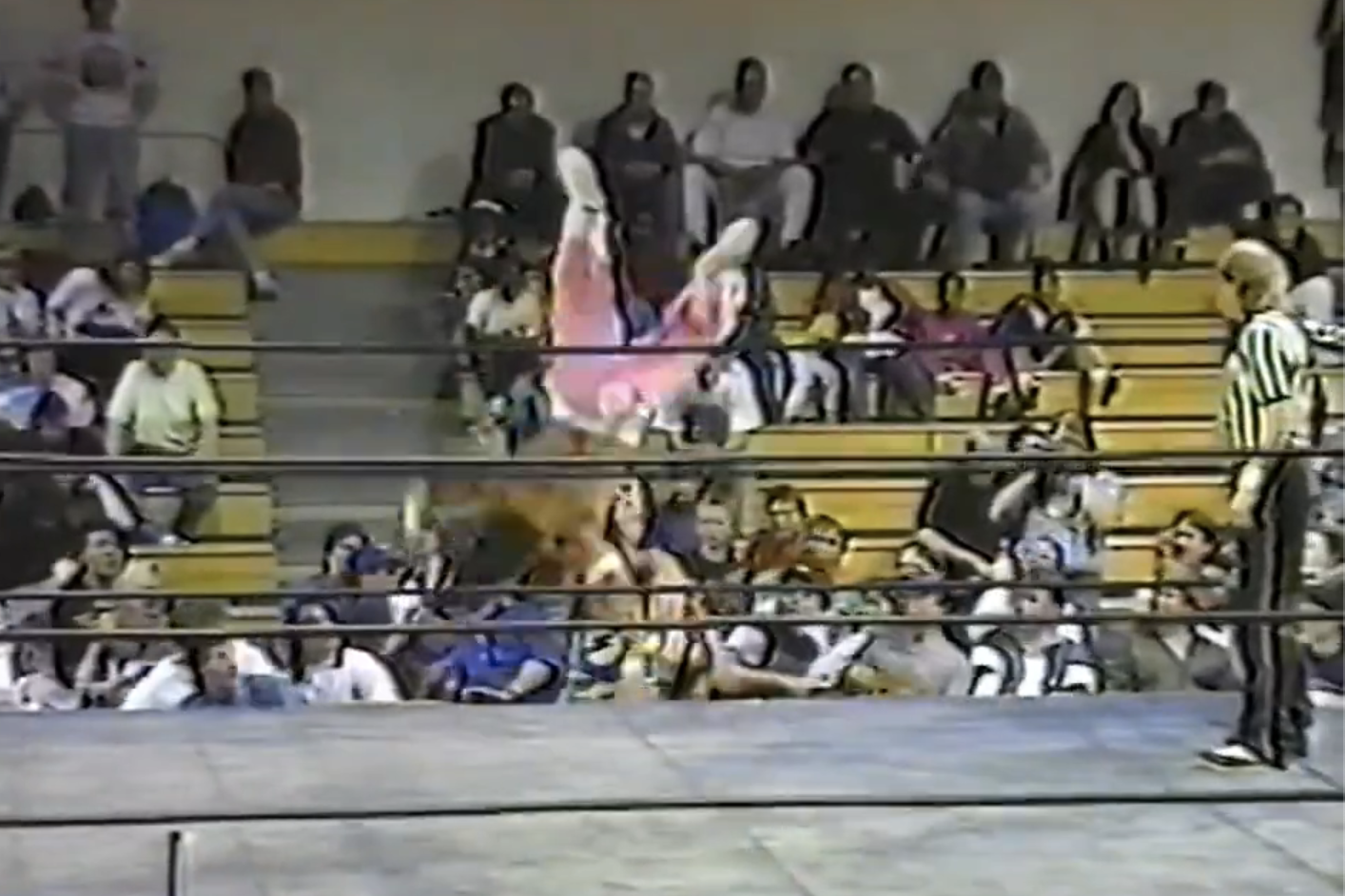
Anyhow, I love this fucking match. It’s not perfect — it's part of his charm that no Sabu matches are — and it’s definitely compromised by its finish, which is a high-minded attempt to protect the perception of both wrestlers despite the fact that neither are long for this particular territory, but watching Sabu hurl himself wildly at Lightning Kid for the sake of a missed clothesline, seeing Kid take that lucha corner bump when he misses a corner leg lariat, witnessing fans take ringside dives because they don’t know or don’t care to get out of the way as Kid and Sabu launch themselves around the parquet court of this tiny little venue, I can’t help but feel like I’m watching one of my favorite styles of American professional wrestling in its infancy. Indie wrestling, local wrestling, call it what you will: this is the kind of thing I’ve gone to see in bingo halls and bars, chicken auction barns and the armory around the corner from my office, flea markets half a mile from my childhood home and music venues in Fargo, North Dakota. Hearing the announcers talk about how Waltman defended the GWF Light Heavyweight Championship on ESPN made me nostalgic for the night when my curiosity about the recently-fired Daniel Bryan got me in the door for my first indie show, where he wrestled some guy by the name of Eddie Kingston.
Odds are that if you’re reading this, you don’t need to have the virtues of independent professional wrestling extolled upon you, but as someone who is still smarting a bit from the loss of a particularly good local indie promotion, I will do so: matches like this are the reason you make time for those shows. Sabu and Sean Waltman wrestled each other five times across their very long careers, with gaps of nine and seven years between those bouts. On one hand, that’s a shame — they’re such natural opponents that you’d hope for more — but on the other hand you need to get your ass to a show so you can be one of the couple hundred people who saw something like this live.
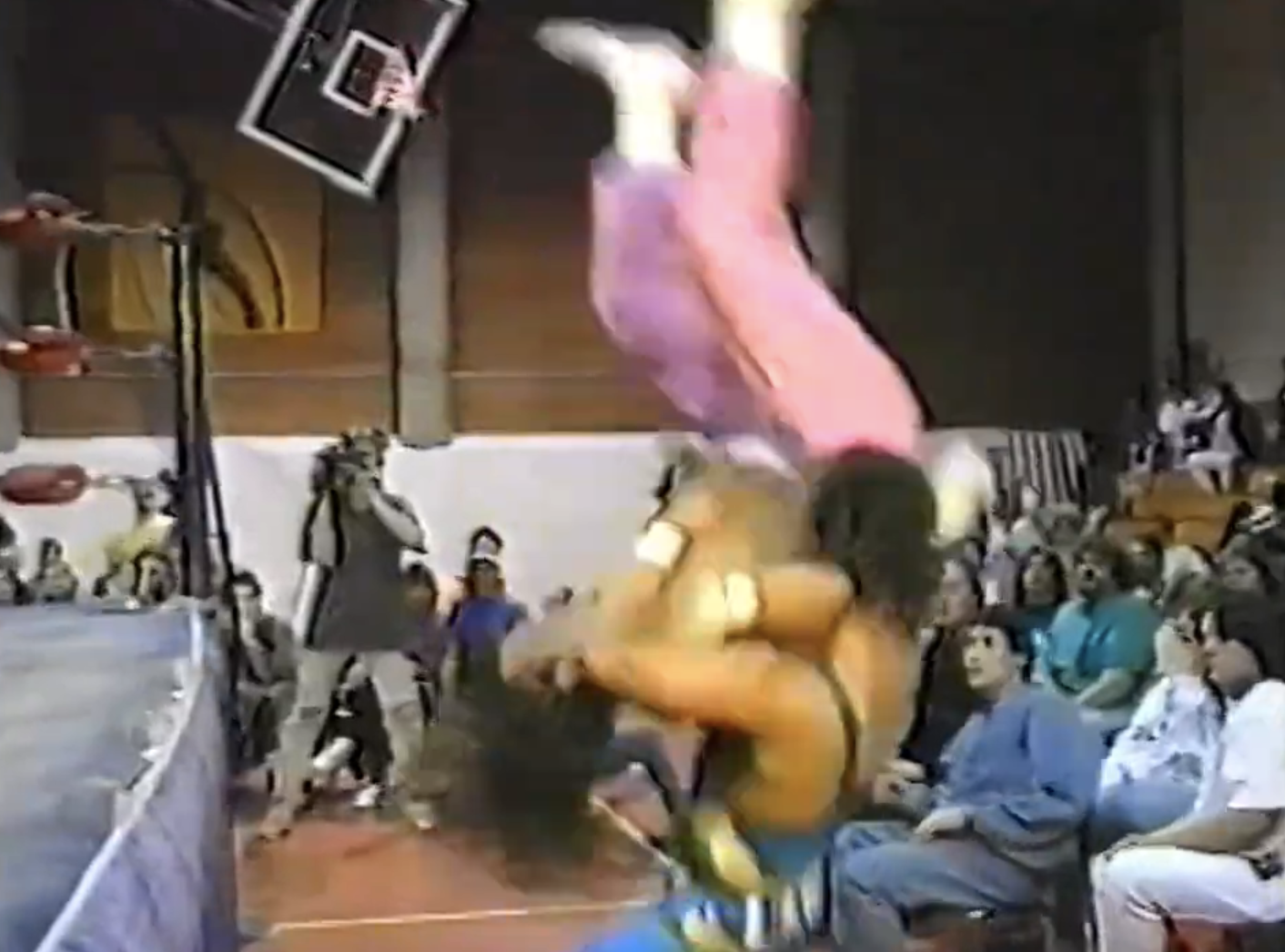
The allure, at least for me, isn’t seeing someone like Waltman before they “make it” in a larger promotion, but to see wrestlers (and wrestling) in spaces where they’re free to experiment, where all of their rough edges and wild ideas haven’t been sanded down for the sake of a neat television broadcast. Sabu and Kid are scrappy here, connecting their big ideas with solid brawling. There’s a sequence midway through the match that stands out as particularly smart, where Kid charges at Sabu, who moves, forcing Kid to bail to the floor. After hitting Kid with a tope con hiro, Sabu picks him up and whips him into the side of the ring, knocking the air out of the Lightning Kid and forcing him back into the front row, giving Sabu time to land an Asai moonsault. You don’t see this aspect of Sabu’s game much in ECW or FMW because brawls to the outside there take on a different form and function, and you don’t see setups like it much in the highly influential cruiserweight matches of the 1990s because, given three to eight minutes on an episode of Nitro, those setups get cut for time.
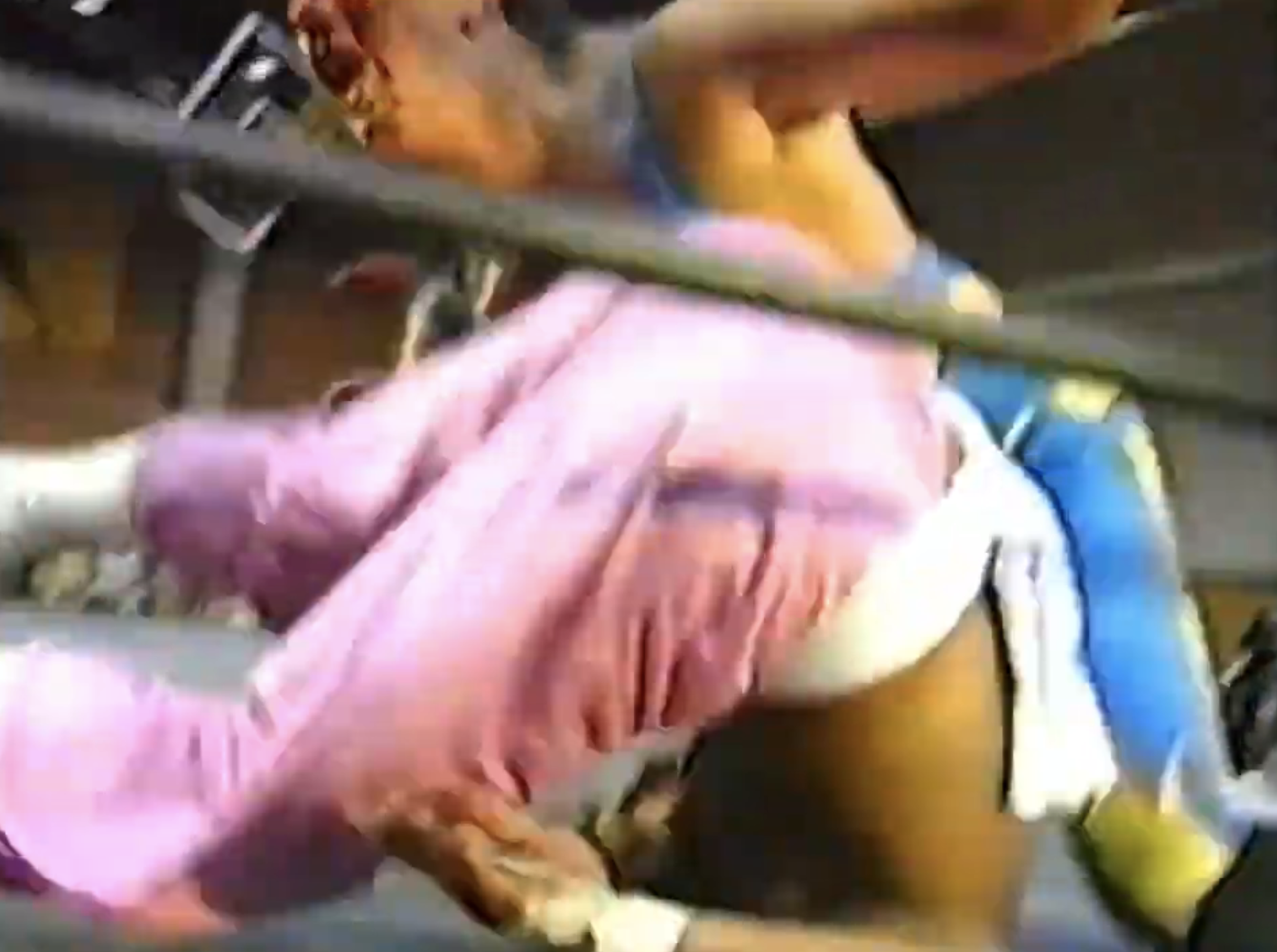
Lightning Kid taps a gusher after that spot when Oliver Humperdink throws him into the ringpost, blood pooling at ringside while Sabu plots his next move, which is a sunset flip powerbomb dialed in from the far-flung future of this great sport. Kid’s blood makes everything Sabu does to him feel meaner, more pointlessly cruel, and while he’s hardly alone in his ability to make light heavyweight wrestling feel weighty and visceral and menacing, Sabu’s way ahead of the curve so far as Americans in 1993 are concerned. Kid’s beat, but Sabu keeps goi for Frankensteiners and moonsaults, surviving when he crashes and burns, pursuing his seeming vendetta against the Kid when he succeeds. If you’re the kind of person who believes Sabu when he says that he’d botch some stuff on purpose, the way he goes early on a Waltman powerbomb counter to one of his hurricanranas, essentially giving himself a top rope ganso bomb, is one hell of an artistic choice.
If you don't believe Sabu, it's still sick. Every action in a wrestling match should have a consequence one way or another, and when it came to making sure of that, Sabu is, again, in extremely rare air. If you think that's enough to slow him down, it's not — not only does Sabu keep fighting here, he doesn't stop fighting until 2025, an eternal wildman forever crashing the gates of this great sport. You love to watch him, sure, but you also love to watch a guy like Waltman fire up on him. They might have done so forever here, were it not for the Funk/Hawk main event. It's a shame the stars didn't align for them to fight more often.
Rating: *** & 3/4